Receive trustworthy, data-backed solar and generator systems in Pasco that harden your power like a shield. We design to your load profile and tariffs, right-size arrays and inverters, and analyze rates, degradation, and outages for predictable payback. Backup generators are dimensioned by kW/kVA, surge, and duty cycles, with fuel planning and automatic transfer sequencing. Commissioning utilizes IV curves and thermography, while remote monitoring flags anomalies early and verifies savings. You'll see how we safeguard uptime, lower bills, and simplify ownership next.
Important Points
The Importance of Reliable Power for Residential and Commercial Properties
A steady electrical supply is the backbone of safety, comfort, and uptime for both homes and businesses. You rely on stable voltage to preserve electronics, ensure HVAC performance, and keep essential systems online. Even temporary fluctuations or surges can destroy data, trip breakers, or decrease equipment service life. Downtime costs accumulate quickly—reduced efficiency, damaged goods, and operational interruptions.
You strengthen reliability by fortifying weak points: surge protection, load balancing, and right-sized backup capacity. With data logging, you pinpoint peak demand, harmonics, and phase imbalance to avoid failures before they occur. Solid outage preparedness plans—fuel rotation, automatic transfer sequencing, and routine load tests—lower recovery time. By focusing on energy resilience, you protect operations, comply with safety standards, and preserve customer trust during grid instability.
Solar Systems That Maximize Efficiency and Savings
You reduce expenses and increase production when smart system design aligns array configuration, inverter choice, and load patterns with your site's insolation and utility pricing. We specify high-efficiency components—N-type bifacial modules, module-level power electronics, and low-loss wiring—to elevate kWh yield per square foot by 5–15%. With continuous monitoring and predictive modeling, you'll check savings against predictions and refine settings for peak ROI.
Advanced Infrastructure Design
From roof geometry to tariff structures, smart system design coordinates every variable to deliver maximum kilowatt-hours per dollar. We initiate our process with your load profile, interval data, and shading analysis to right-size the array and orient strings for optimal production during peak-rate windows. We model seasonal demand, apply utility rate engines, and simulate net-metering outcomes to maximize bill offsets.
You obtain measurable control through smart grid integration and adaptive controls that schedule usage when rates are lowest and solar output is highest. We organize circuits, set export limits as needed, and adjust inverter setpoints to maintain stable voltage while minimizing clipping. Weather-adjusted predictions inform dispatch protocols, while monitoring alerts facilitate continuous optimization. The result: predictable payback, enhanced self-consumption, and data-verified and resilient cost reductions.
Premium-Efficiency Components
Intelligent design yields returns only when hardware transforms sunlight into kilowatt-hours with minimum losses. For this reason, we specify bifacial panels combined with solar grade inverters and high-conductivity balance-of-system components. Bifacial modules harvest front-side irradiance and rear-side albedo, delivering 5–20% higher yield depending on roof reflectance and tilt. We pair them with low-resistance wiring, MC4 connectors, and optimized string lengths to maintain DC losses under 1.5%.
Our company's solar grade inverters offer 97–99% weighted efficiency, quick MPPT, and low-voltage ride-through to protect uptime. Module-level power electronics reduce shade and mismatch, increasing energy by 3–10% on complex roofs. We confirm performance with IV-curve testing, thermography, and production analytics, so you see measurable gains, faster payback, and resilient output across seasons.
Emergency Generators for Uninterrupted Power Supply
You require a generator configured to the critical loads, with initial surge and sustained wattage suited to your utility interconnect and panel priorities. We evaluate your outage risk and usage profile to advise on kW capacity, transfer switch type, and load reduction strategy that preserves uptime without budget overruns. After that we develop a fuel plan and maintenance schedule—natural gas, propane, or diesel—according to runtime targets, local supply resilience, and kWh pricing.
Sizing and Load Planning
Although outages are beyond prediction, your generator needs to be consistent. We start sizing with a comprehensive load analysis that quantifies starting and running watts for HVAC, well pumps, refrigeration, medical instruments, and critical circuits. We compute surge factors, diversity, and duty cycles, then align those loads to your service rating and panel count to define feeder segmentation and transfer priorities.
You'll see a data-backed kW/kVA recommendation, including 120/240V split-phase or 120/208V/277/480V three-phase compatibility, voltage dip tolerance, and allowable frequency deviation under worst-case motor inrush. We calculate simultaneous demand using NEC demand factors and validate conductor and breaker coordination. If you envision EV charging or future additions, we right-size capacity with a growth margin, guaranteeing your generator sustains stable power quality without overspending.
Maintenance and Fuel Options
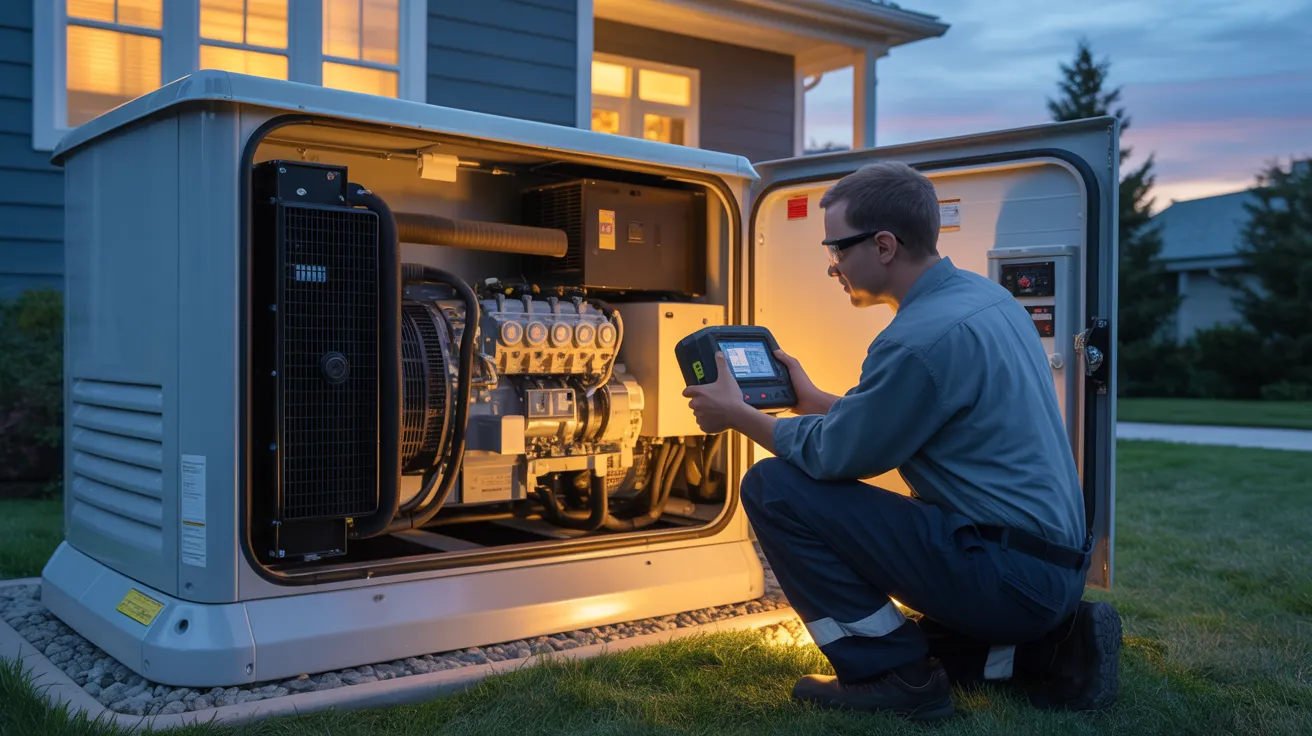
Once the appropriate kW/kVA has been chosen and power quality confirmed, dependability is now determined by maintenance discipline and the fuel you choose. Arrange quarterly Gradient Electric LLC maintenance reviews to verify battery condition, coolant levels (CCA/voltage under load), transfer switch testing, and infrared scanning of lugs. Swap out filters according to hour meters, instead of arbitrary calendar schedules, and log oil analyses to track metal contamination and fuel mixture. Test weekly at load to prevent wet stacking.
Select fuel based on runtime, availability, and emissions. Natural gas provides extended supply but requires utility pressure; add an auto-shutoff and line regulator checks. Diesel provides high energy density; prevent oxidation with fuel stabilization, quarterly polishing, and water separation. Propane stores cleanly; size tanks for forty-eight to ninety-six hours. Always document run hours, alarms, and service dates for compliance and warranties.
Personalized Planning, Implementation, and Maintenance You Can Count On
As every property and load profile is unique, our engineers initiate a site-specific assessment—roof geometry, shading analysis, utility tariffs, historical kWh data, and critical loads—to design a solar and backup system that meets your performance and budget requirements. We transform results into a optimally-sized array, inverter topology, battery capacity, and transfer switch strategy, then validate with production modeling and outage simulations.
You'll get thorough design consultations, stamped drawings, and a timeline that reduces downtime. Our licensed installers take care of permitting, structural attachments, electrical interconnects, and commissioning with verified settings and acceptance tests. Once we complete go-live, we watch performance, schedule proactive maintenance, and handle alerts before they affect uptime. You'll be provided with custom warranties matched with component lifecycles and documented service SLAs to preserve ROI.
Local Expertise, Elite Technology, Confirmed Performance
Despite Florida's demanding grid and weather conditions, you gain access to a team that knows Pasco County codes, wind-load requirements, and utility interconnection rules inside out. We design to 3‑second gust ratings, specify UL 2703/1741-certified equipment, and submit interconnects that pass on the first review. You get bankable modules, high-efficiency inverters, and surge-hardened balance-of-system components tested in coastal environments.
We verify performance with irradiance data, shade analysis, and load profiles, then commission systems with IV-curve tracing and thermal imaging. Regular performance reports evaluate kWh output with modeled expectations, so you can track ROI. Our community workshops interpret technical standards into straightforward guidance, while workforce training keeps our installers informed on NEC updates and utility protocols. That's local expertise merged with premium technology—delivering verifiable results.
Delivering Energy Independence Effortless, Clever, and Economical
Although energy systems might seem complex, we make independence easy by streamlining designs, digitizing workflows, and focusing on total lifetime value. You get pre-engineered solar, storage, and generator packages calibrated for your load profile, roof geometry, and utility tariffs. Our software simulates production, degradation, and outage scenarios, then right-sizes equipment to hit your reliability and payback targets.
We teach you how it works. During interactive workshops, you'll examine real performance data, warranty terms, and maintenance plans. We clarify expenses with transparent proposals and multiple financing options—cash, loans, and PPAs—evaluated alongside utility rates and incentives. Digital tracking confirms savings, identifies irregularities, and schedules service before concerns worsen. You stay in control with intuitive interfaces, predictable billing, and a system engineered for lasting value.
Your Questions Answered
What Funding Choices or Incentives Exist for Solar and Generators?
You can use federal tax credits (ITC at 30%) and state rebates to decrease solar costs, while PACE, low-interest loans, and lease options lower upfront spend. For generators, manufacturer promos and utility rebates help; some areas offer resilience incentives. You can combine credits with accelerated depreciation (business owners) and net metering savings. We'll evaluate cash vs. loan vs. lease payback, illustrating ROI, kWh offset, and lifetime O&M to improve total cost of ownership.
What Is the Expected Timeframe for Permitting and Inspection Processes?
Permit timelines typically run 2–8 weeks; inspections add an additional 1–3 weeks. In most counties, 62% of solar permits are approved in under 30 days, though inspection variability can extend schedules, especially with utility interconnection queues. You'll expedite the process by submitting engineered plans, load calculations, and NEC-compliant one-lines upfront. Plan for longer schedules for historical districts or service upgrades. We follow AHJ SLAs daily and proactively engage utilities to shorten review cycles and reduce re-inspections.
Are Warranties Available for Equipment and Installation Workmanship?
Yes. You receive manufacturer warranties on panels, inverters, and batteries—typically 10 to 25 years for performance and product. You'll also receive workmanship guarantees that cover installation quality, often between 5 and 10 years. We log serials, register products, and provide warranty certificates. Failure rates remain at under 0.5% annually; if concerns develop, we diagnose issues, file claims, and replace components following terms. You'll have clear coverage details, response times, and escalation paths, ensuring predictable lifecycle costs and uptime.
What Happens if I Relocate Following System Installation?
When you relocate following system installation, you have two options: transfer it to the buyer or relocate it. We'll detail your selling choices, including agreement transfers and benefits that enhance property worth. We'll furnish portability specifics about equipment warranties, monitoring, and any financial arrangements or renewable energy certificates. If relocation's preferred, we'll examine load-bearing factors, compliance needs, and repurposing potential for hardware/inverters, then provide a budgeted proposal with outage predictions and efficiency forecasts.
Is Monitoring System Performance From a Mobile App Possible?
Mobile app access allows you to monitor system performance. You'll see up-to-date data on production, consumption, and battery state-of-charge, along with past performance trends and system alerts. The app supplies instant diagnostics for inverters, communication gateways, and batteries, enabling troubleshooting remotely and updating firmware. You can configure performance thresholds, get outage notifications, and share data securely with support. Role-based access, encrypted telemetry, and API integrations ensure reliable data insights and accelerated resolution when anomalies occur.
Final Thoughts
You've examined the case for energy independence—now examine a concept: can solar plus a correctly sized generator genuinely reduce outages to virtually zero while cutting costs? Our data says yes. Combine premium panels, smart inverters, and a appropriately matched standby generator, and you'll cut utility spend 30–60% and preserve exceptional uptime. We tailor, install, and maintain everything, enhancing ROI with measurable performance metrics. You get robust, local, code-compliant power—validated, consistent, and crafted around your needs.